Sunday, April 10, 2022

Elevador de Santa Justa


Lisbon has many steep hills - the city is nicknamed ‘The City of Seven Hills’. This posed significant challenges to its citizens over the centuries. These challenges were initially overcome by installing inclines pulled by animals. During the industrial age several steam-powered funiculars (lifts or elevators) were built to help locals and tourists climb the steep and long slopes that are so characteristic in Lisbon. Several are still used to this day, now run by electricity. One of these funiculars is the Elevador de Santa Justa.

The elevator was built by the Portuguese engineer Raoul Mesnier du Ponsard, who was once a student of the great iron craftsman Gustave Eiffel, whose crowning glory was the magnificent Eiffel Tower. Construction of the elevator began in 1900 and was finished in 1902. The tower of the elevator is 45 meters tall and includes two elevator cabins, decorated in wood, mirrors and windows, and has a capacity of 29 passengers in each. At the top of the elevator there is a viewing platform which provides great views of the city.

We decided to give it a try before the tourist season begins and it becomes impossible to do so. We boarded it downtown - the lower part of Lisbon - and were lifted to the upper district of Bairro Alto - which would be a very steep vertical walk otherwise.๐Ÿ˜€ These are the city's lowest and highest points.

The Santa Justa Lift was inaugurated as one of the city’s public transport systems on 10th July 1902.

Lisbon’s residents were so excited to try this novelty, that over 3000 tickets were sold on that first day.


It is one of the symbols for Lisbon. If you ask me it looks a bit awkward and squeezed in between buildings. But at the same time, it fits perfectly there. If you come to the bottom of the lift you will see a line because let’s face it – there is always a line to the Santa Justa Lift.


The elevator ride itself is not an attraction. It only lasts about a minute.The highlight is seeing the view of the city from the top. It is amazing. 


The "High" section of Lisbon has many churches, some museums, restaurants, and parks.
The next blog will take you to one of these churches/museums.
Bet you can't wait!!!

Thursday, April 7, 2022

Museu da Farmรกcia

 Lisbon is chock full of museums - if you can just find them. One such museum that we happened to stumble upon this week was the Health and Pharmacy Museum.

(It's located at the top of this hill. Big surprise, I know.)


The museum covers 5,000 years of history of the pharmaceutical world and the evolution of the Pharmacies of Portugal. 


There is waaaaaaay too much to tell about, but I will share one interesting thing. 

In the 14th century, Europe experienced one of the most marked diseases in human history, affecting millions of people across the continent: the black plague.

The black plague costume was characterized by a black mantle, which covered the whole body in order to protect those who wore it. The head was covered with a black mask that had the peculiarity of having a beak on which aromatic herbs mixed with straw were placed. This compound had the purpose of filtering out the stench of the black plague, avoiding the contamination of the doctor, according to the miasmatic theory.


(Here you can compare the two masks worn to filter out contaminants. Haha)


The exhibits were very well done.

So enjoy the history of health and pharmacy - in no particular order - since the computer and I are not the best of friends today and we have to leave for the temple soon.  


(The North American Indians were even represented.)


Monday, April 4, 2022

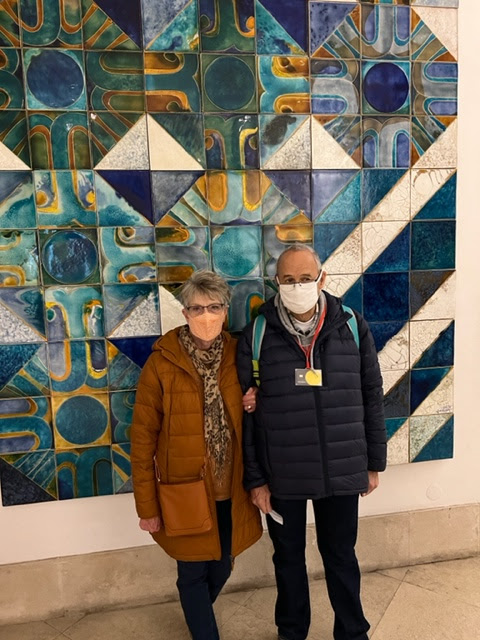
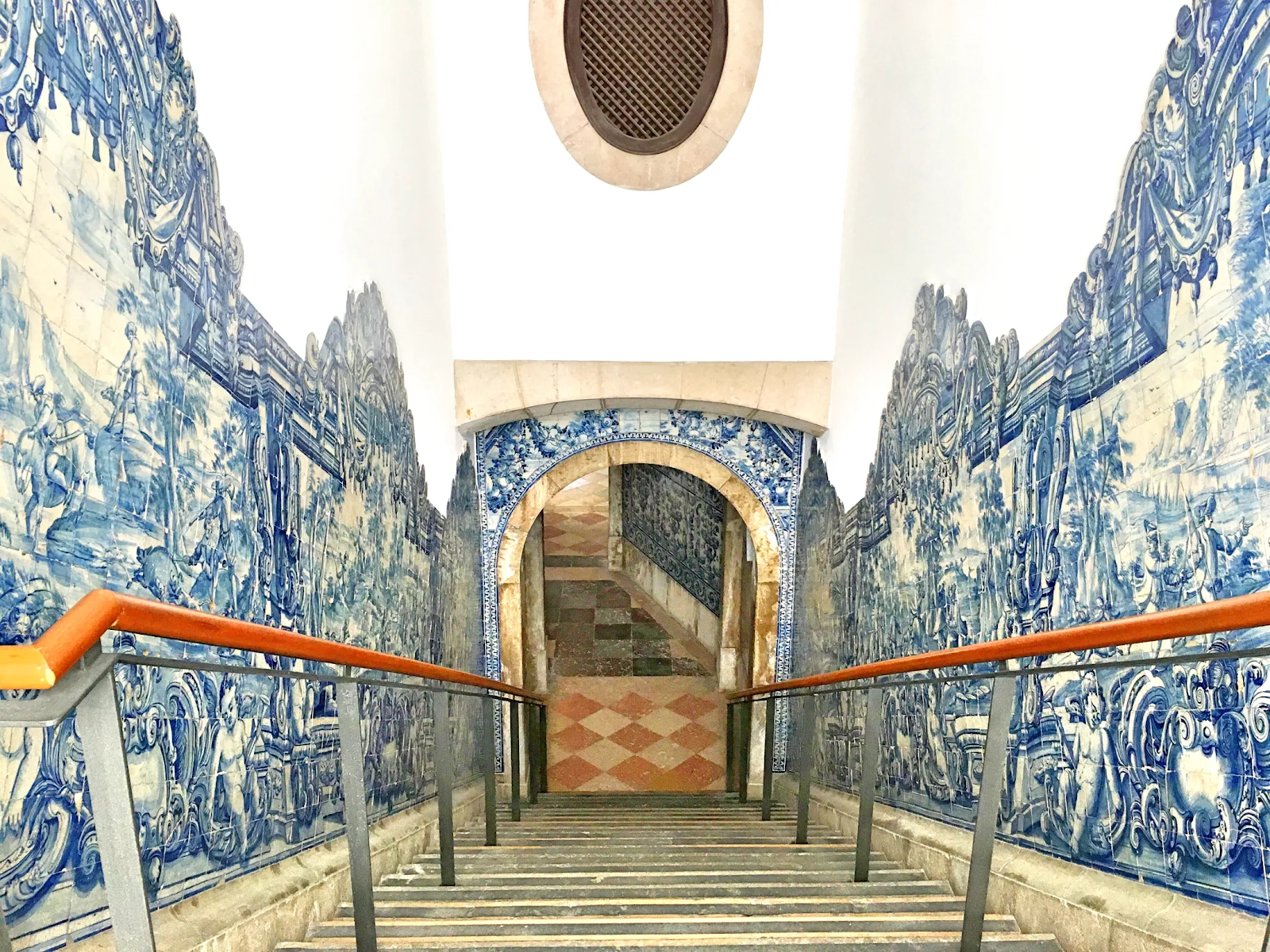
National Tile Museum (Museu Nacional do Azulejo)


Portugal is known for its decorative tiles. 

The azulejos found throughout Portugal are painted with patterns, design motifs and scenes of life.


Walking through the Lisbon, you’ll find gorgeous tiles everywhere - on buildings, in the metro stations, inside churches - you name it! 

If you haven’t had enough of the street-side artistic decadence, you can head to the National Tile Museum.

The museum is housed in a 16th century convent.  This unique museum covers the entire history of the azulejo (hand-painted tile). The word “azulejo” comes from the Moorish word az-zulayj meaning “polished stone.”


I thought it was fascinating. However, not everyone in our group was as impressed.๐Ÿ˜„


I gave it a ๐Ÿ‘๐Ÿ‘ up. Some people just don't appreciate a good thing when they see it! I would go back again, but I would probably have to go by myself. HAHA